Tenant insurance

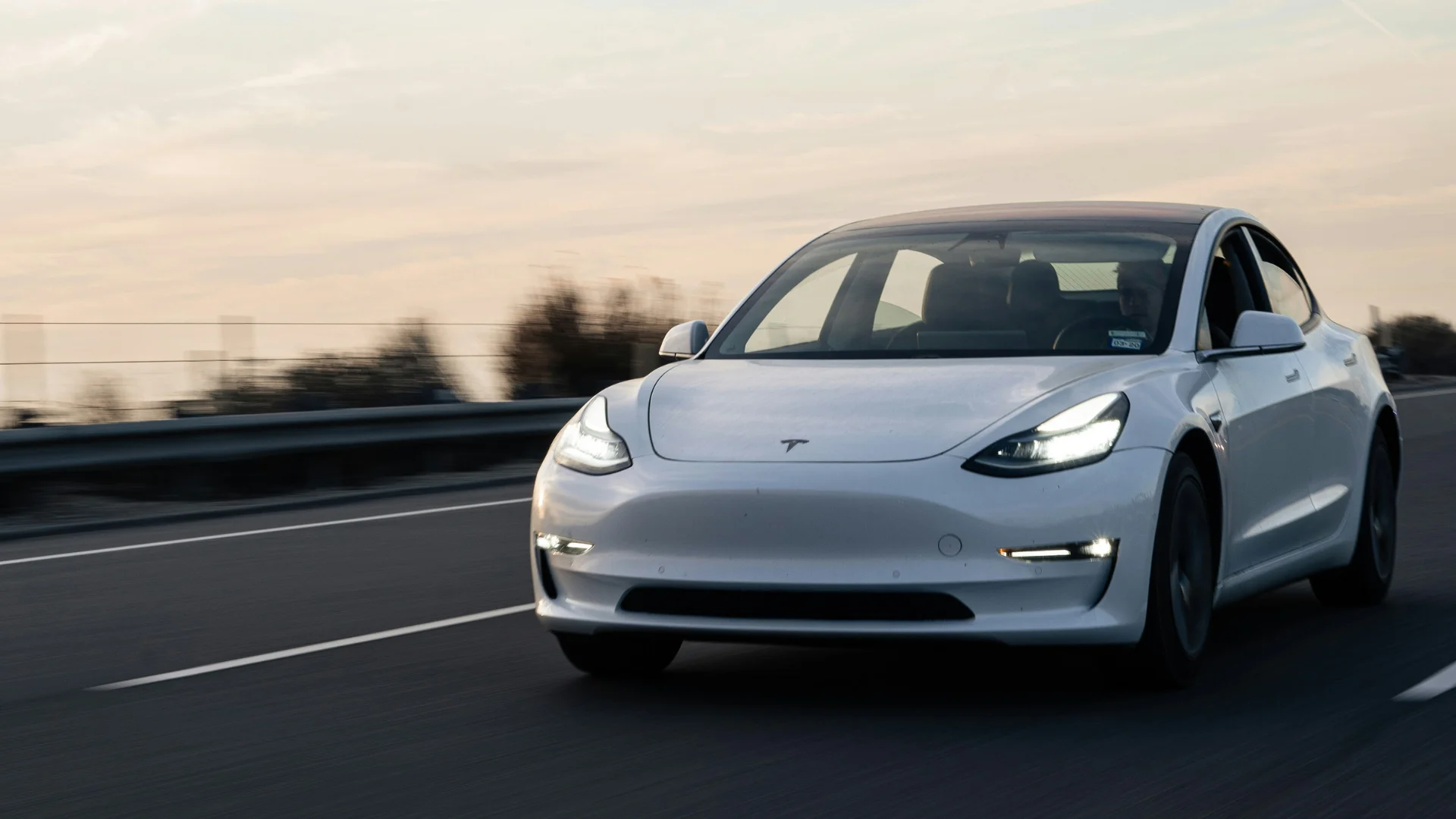
Buying a Tesla can save you money on gas, but there’s another ownership cost Quebec drivers should consider: car insurance.
YouSet’s 2026 Quebec car insurance pricing data found that Tesla had the highest median premium among the 10 most quoted car makes analyzed, at $195 per month. On the flip side, Toyota had the lowest at $97 per month. That makes Tesla’s median approximately twice as high, a difference of $98 per month or $1,176 per year.
Why does Tesla car insurance cost more? In this article, we take a closer look at the data, along with factors such as repair costs, vehicle value, coverage, and how Tesla drivers in Quebec insure and finance their vehicles.
Key takeaways
The median cost of Tesla car insurance in YouSet’s Quebec data was $195 per month, or about $2,340 per year. That’s approximately 71% higher than the overall Quebec median of $114 per month.
Tesla insurance costs also varied considerably between applicants. The middle 80% of Tesla applicants received quotes ranging from approximately $88 to $434 per month.
| Low | Median | High | |
| Tesla | $88 | $195 | $434 |
| Quebec overall | $30 | $114 | $283 |
The $195 median is a useful benchmark, but it doesn’t mean every Tesla driver in Quebec will pay that amount. Individual Tesla insurance quotes can vary based on the model, whether it’s new or used, your coverage, driving history, location, and other factors.
Among YouSet’s 10 most-quoted vehicle makes in Quebec, Tesla sat at the high end of the pricing range and Toyota at the low end.
Tesla’s median premium was about 101% higher than Toyota’s. However, that doesn’t mean switching from a Toyota to a Tesla will automatically double your premium. These figures represent different groups of applicants and vehicles, and factors such as driver profile, vehicle age, model, and coverage may differ.
Tesla stood out even when compared with the other commonly quoted makes in YouSet’s data.
| Car make | Median cost | % difference |
| Tesla | $195 | – |
| Kia | $124 | 57% higher |
| Hyundai | $116 | 68% higher |
| Mazda | $110 | 77% higher |
| Volkswagen | $108 | 81% higher |
| Ford | $108 | 81% higher |
| Chevrolet | $103 | 89% higher |
| Honda | $100 | 95% higher |
| Nissan | $100 | 95% higher |
| Toyota | $97 | 101% higher |
Even compared with Kia, the second-highest make in the table, Tesla’s median was 57% higher. Tesla was also about 71% higher than Quebec’s overall $114 median and 101% higher than Toyota.
Typically, insurers consider both the vehicle being insured and the individual driver, including how expensive the vehicle is to repair or replace and the coverage selected. Here are a few reasons why Tesla drivers tend to pay more for car insurance:
One factor is the potential cost of repairing an electric vehicle after an accident.
Mitchell’s Q2 2026 EV collision data found that the average severity of a repairable claim was $6,645 for battery electric vehicles, compared with $5,411 for gas-powered vehicles. That’s a difference of $1,234 per repairable claim, or about 23%.
Battery electric vehicles have higher repair costs partly because they use more complex, interconnected systems. EV repairs can also rely more heavily on original equipment manufacturer replacement parts.
Higher potential repair costs matter to insurers. If a vehicle is more expensive to put back on the road after a collision, the potential cost of future claims can contribute to a higher insurance premium.
Teslas also have expensive parts, including batteries, cameras, sensors, and electronics, which can make some collision repairs more complicated.
This doesn’t necessarily mean every Tesla repair will be expensive, or that EV technology automatically means a higher insurance rate. But when specialized components are damaged, repairs may require specific parts, equipment, diagnostic work or trained technicians.
Thus, the more expensive a Tesla is to repair, the more costly an insurance claim can be, which can contribute to higher premiums.
The vehicle’s value can also influence insurance pricing because a more valuable vehicle can cost an insurer more to repair or replace after a covered loss.
The current manufacturer’s suggested retail prices (MSRP) of Tesla models include $39,490 for the Model 3 Premium RWD and $49,990 for the Model Y RWD, with higher Tesla trims costing considerably more. By comparison, the 2026 Toyota Corolla starts at an MSRP of $24,520, while the 2026 RAV4 starts at $37,500.
Both Tesla and Toyota sell vehicles across a wide range of price points, so this isn’t a direct model-for-model comparison, but it illustrates why the mix of vehicles within each make can matter when comparing insurance premiums.
In YouSet’s data, 92% of Tesla applications included both collision and comprehensive coverage, compared with just 5% that selected liability-only coverage.
Collision and comprehensive coverage protect against risks involving the insured vehicle itself, such as collision damage, theft, and certain types of non-collision damage. Adding these coverages generally costs more than carrying liability coverage alone.
About 63% of Tesla applications were for financed vehicles, while 29% were for vehicles owned outright and 7% were leased.
In Quebec, collision and comprehensive coverage aren’t legally required for a vehicle you own outright. However, financing and lease agreements typically require insurance that covers damage to the vehicle.
That could help explain why collision and comprehensive coverage were so common among Tesla applicants in YouSet’s data.
YouSet’s data also shows that 56% of Tesla applications were for new vehicles, compared with 41% for used vehicles.
New vehicles typically have a higher replacement value than older versions of the same vehicle, which can increase the potential amount an insurer may have to pay if the car is stolen or written off. With more Tesla applicants in YouSet’s dataset insuring new vehicles, vehicle age and value may therefore be another part of the pricing picture.
Among Tesla applicants, 76% selected $1 million in third-party liability coverage, while 20% selected $2 million and 2% selected $500,000.
Insurance history also varied. About 62% of Tesla applicants had been insured for at least five years. In YouSet’s data, these applicants had a median premium of about $171 per month, compared with $279 for applicants with one year of insurance history and $265 for those with two years.
No, electric cars are not inherently more expensive to insure than their gas-powered counterparts. While Tesla had the highest median among YouSet’s 10 most-quoted vehicle makes of 2026, that doesn’t mean every electric car costs more to insure than every gas-powered vehicle.
A 2026 Ratehub analysis comparing 10 gas vehicles with electric or hybrid alternatives found that the electric version was more expensive to insure in 8 of the 10 cases; however, insurance pricing ultimately depends on the specific vehicle, value, repairability, theft or claims experience, and the driver.
For example, electric vehicles are less likely to be stolen than gas cars. U.S. insurance data from the Highway Loss Data Institute found that several EVs had particularly low whole-vehicle theft claim frequencies among 2022–2024 model-year vehicles. The Tesla Model 3 AWD had the lowest relative theft claim frequency in the study, while the Model Y AWD, Model 3 RWD and Model S AWD were also among the 20 vehicles with the lowest frequencies.
Keep in mind that the HLDI data is US-based, so we’re not using it as direct evidence of theft frequency in Quebec. However, it shows that factors driving EV insurance prices up can be offset by other characteristics of a particular vehicle.
Although Teslas can be more expensive to insure, here are a few things drivers can do to help lower their premiums:
YouSet is a technology-driven insurance platform that simplifies buying and renewing insurance. Combining proprietary technology and the support of AMF and RIBO licensed brokers, we’re making it faster and easier to buy home and car insurance online from top insurers for less.





Get the best price year after year with price alerts at renewal. We’ll even re-shop to find you a better deal.