
Insurance tips



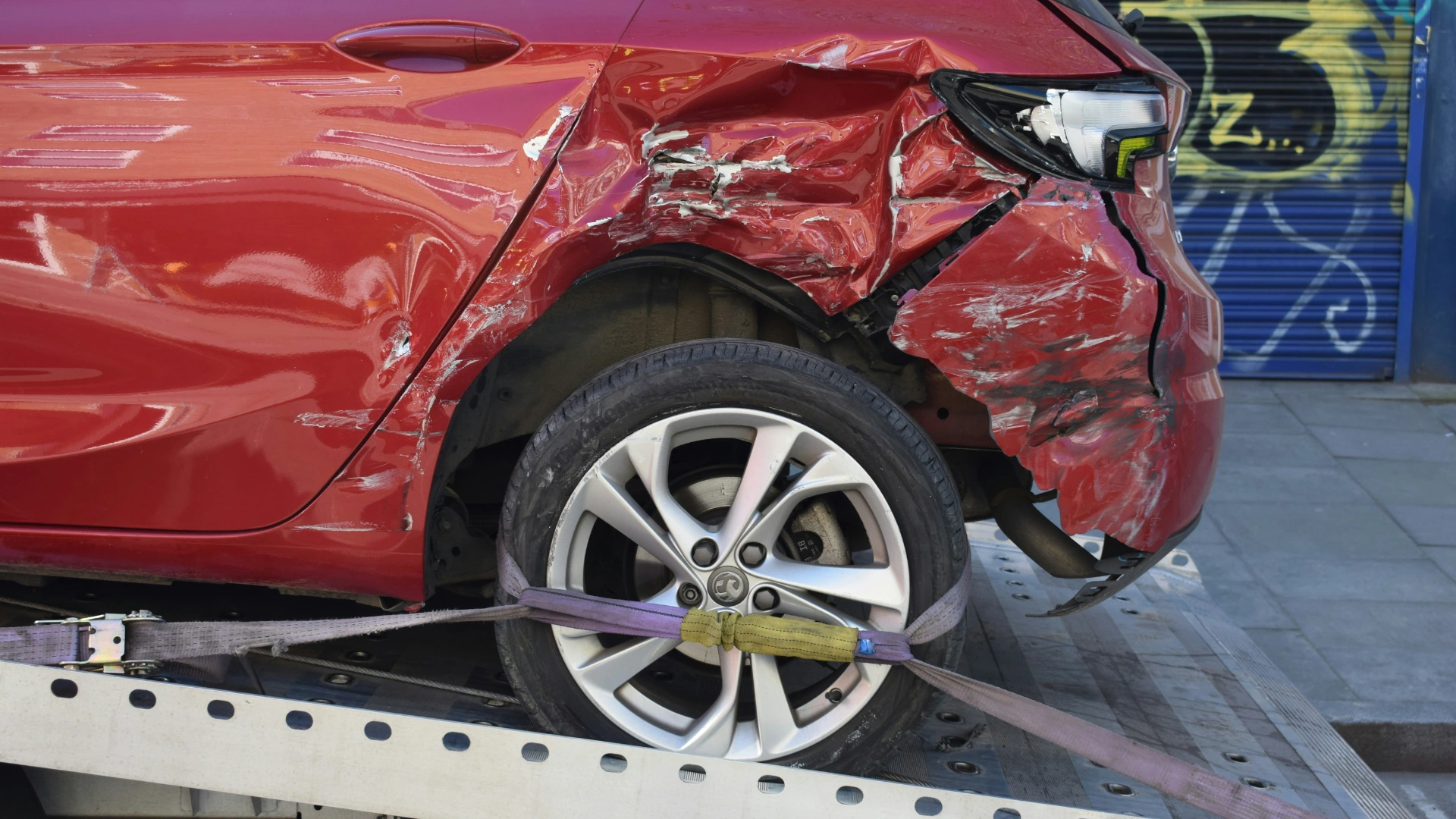
Has your car been declared a total loss after an accident? Between going back and forth with the insurance company, repair estimates, and the thought of replacing your vehicle, it’s not always clear what “total loss” really means or what to expect next.
The good news is that you don’t have to navigate it alone. In this guide, we’ll break down how insurers typically decide when a car is written off, how your payout may be calculated, and the key dos and don’ts to follow if your vehicle has been declared a total loss, or you think it will be.
If your car is deemed a total loss, it’s important to understand how your payout is calculated and whether you have rental car coverage in place. You should also be prepared for a possible increase in your premium at renewal, and avoid rushing to buy a replacement vehicle or assuming the payout will fully cover the cost of a brand-new car.
When your vehicle is deemed a total loss by car insurance, it means the damage is so severe that repairing it doesn’t make financial sense. In other words, the vehicle is either beyond repair or the cost of fixing it exceeds the car’s actual value. You might also hear this referred to as “written off.”
Insurance providers look at a few key factors when deciding whether to write off a car:
Ultimately, the goal is to avoid spending more on repairs than the car is worth. That said, insurance providers can have slightly different thresholds for declaring a total loss. Some may decide that repairs over 70% of the car’s value are too much, while others might set the bar closer to 80% or even 90%.
That’s why two cars in similar accidents can end up with different outcomes. If your friend’s car was written off after a certain amount of damage, that doesn’t necessarily mean yours will be too. Your insurer might have a different percentage, or your car’s value could be higher or lower than your friend’s.
There are many misconceptions and myths about when a car is written off. For example, many people think that if your airbags deploy, your car is automatically a total loss, but that’s not necessarily true. Airbag replacement is expensive, but if the rest of the damage is manageable and below your insurer’s threshold, your car can still be repaired.
The key thing to remember is this: insurers look at the overall cost of repairs compared to your car’s value. If the cost of fixing the car is under that percentage, it usually won’t be written off. A few common scenarios where cars are written off include:
On the other hand, situations that usually don’t lead to a write-off, as they are less likely to exceed the insurer’s threshold, are:
While the threshold for declaring a total loss can vary between insurers, the calculation of your payout is generally straightforward. Most insurers use this simple formula:
Actual Cash Value (ACV) – Deductible = Total Loss Payout
The Actual Cash Value (ACV) is the market value of your car immediately before the accident. It’s not what you originally paid for it or what you still owe on your car loan or lease, but rather what your car was realistically worth that day. Insurers consider factors such as age, mileage, condition, and comparable sales.
Here’s an example scenario:
Since the repair cost exceeds $11,250, the car is declared a total loss. If your deductible is $500, your payout would be $15,000 – $500 = $14,500
Discovering that your car is a total loss can be overwhelming, especially if you rely on it daily. To make things easier, follow these dos and don’ts, which will help you avoid common mistakes and make the most of your payout.
Your insurer will calculate the Actual Cash Value (ACV) of your car and subtract your deductible. That number is your settlement. If your policy includes replacement cost coverage, you may receive a higher payout, enough to buy a similar new car.
It can be tempting to start shopping for another car right after the accident, but wait until your payout is finalized.
There are countless horror stories of people who rushed to replace their vehicle before the claim was finalized, only to find out that their payout was less than expected. They had assumed the insurance company would pay the amount they originally paid for their car, but they didn’t account for factors such as the deductible or the fact that the payout would be sent to their lender first.
Buying another car too soon could leave you with unexpected debt, an extra loan, or even two car payments at once. It’s always better to wait for the official settlement, so you know exactly how much money you’ll have in hand.
While your car insurance claim is being processed (which can take anywhere from 1 to 3 weeks), you may be eligible for a rental car if you have loss of use coverage.
If your policy doesn’t include replacement cost coverage, a total loss will be settled with the car’s actual cash value—not the cost of buying a brand-new vehicle. Only with replacement cost coverage can you expect a payout that would allow you to purchase a new car of a similar make and model.
A total loss claim can affect your future insurance premiums, but how much depends on your fault and claims history. The good news? If you weren’t at fault, the increase will likely be much smaller, or you might not see one at all.
If your vehicle was financed or leased, your insurer will typically send the payout to the lender or leasing company first. You’ll only receive the remainder of the balance, if any.

YouSet is a technology-driven insurance platform that simplifies buying and renewing insurance. Combining proprietary technology and the support of AMF and RIBO licensed brokers, we’re making it faster and easier to buy home and car insurance online from top insurers for less.





Get the best price year after year with price alerts at renewal. We’ll even re-shop to find you a better deal.





![Allstate Car Insurance vs. YouSet: Pros and Cons [2026]](https://youset.ca/wp-content/uploads/2026/02/Allstate-Car-Insurance-YouSet.webp)