Car insurance


Moving to a new province comes with a long to-do list, and updating your car insurance should be near the top. In Canada, car insurance is not one-size-fits-all. Coverage rules, rates, and minimum mandatory requirements vary by province and territory, which means the policy you had before may no longer work in your new province.
In this guide, we’ll break down how insurance systems differ across Canada, what coverages are mandatory in your new province, and how to get a car insurance quote after your move.
Key takeaways
Car insurance rules vary by province in Canada, meaning the coverage you had before may not meet your new province’s requirements. When you move, check your province’s insurance system, review mandatory and recommended coverages, gather your insurance history, and get a compliant quote through a licensed broker or online platform like YouSet.
Car insurance in Canada isn’t the same everywhere. Each province or territory operates under a public, private, or hybrid insurance model, and that affects how you’ll be covered.
In a public system, the government runs the mandatory auto insurance program. You don’t shop around for coverage; it’s provided by a single provincial insurer, with standardized coverage and regulated rates.
For example, in Quebec, the public auto insurance plan covers bodily injury from accidents, regardless of fault, including medical expenses and income replacement.
Most of Canada operates in a private system, where drivers must carry the mandatory coverage required by their province, but they can shop around and compare quotes from different insurers. Some provinces, like Quebec, have a hybrid system that blends both, typically with the government covering bodily injury and private insurers handling property damage.
Understanding your new province’s model ahead of time helps you know whether you’ll be shopping around or working with a government provider for part of your coverage. Here’s how each province and territory is structured:
| Province/Territory | Insurance system |
| Ontario | Private |
| Quebec | Public (SAAQ) and private |
| Manitoba | Public (MPI) |
| Saskatchewan | Public (SGI) |
| Alberta | Private |
| British Columbia | Public (ICBC) |
| New Brunswick | Private |
| Nova Scotia | Private |
| Prince Edward Island | Private |
| Newfoundland and Labrador | Private |
| Yukon | Private |
| Northwest Territories | Private |
| Nunavut | Private |
The next step is to review your new province’s mandatory coverage requirements. While each province requires you to have auto insurance, the exact rules and minimum limits can vary. Verify the minimum mandatory coverage for:
Beyond mandatory coverage, you’ll want to check which optional coverages are strongly recommended. Two of the most important optional coverages are:
It’s also a good idea to look into recent or upcoming changes in provincial insurance laws, as these new rules could be different from what you’re used to.
For example, Ontario is making accident benefits coverage optional as of July 1, 2026, whereas it was formerly mandatory. Alberta is also transitioning away from its current tort-based system to a “care-first” model in 2027, under which insurers will provide medical care, income support, and related benefits to drivers regardless of fault.
When you apply for car insurance in a new province, insurers won’t just look at your vehicle and postal code; they’ll also review your insurance history. While you may be required to provide that information during the quote process, providers will often confirm it using digital industry databases that confirm previous policies, claims, and coverage timelines.
However, that data may not transfer seamlessly, depending on the province you moved from. It’s a good idea to have supporting documents ready, such as a digital letter of experience from your previous insurer or official records confirming your claims history. Having this information on hand helps prevent delays, ensures your premium is calculated correctly, and indicates your eligibility for discounts.
A well-documented insurance history can make a meaningful difference in the price you’ll pay, especially when you’re starting fresh in a new province.
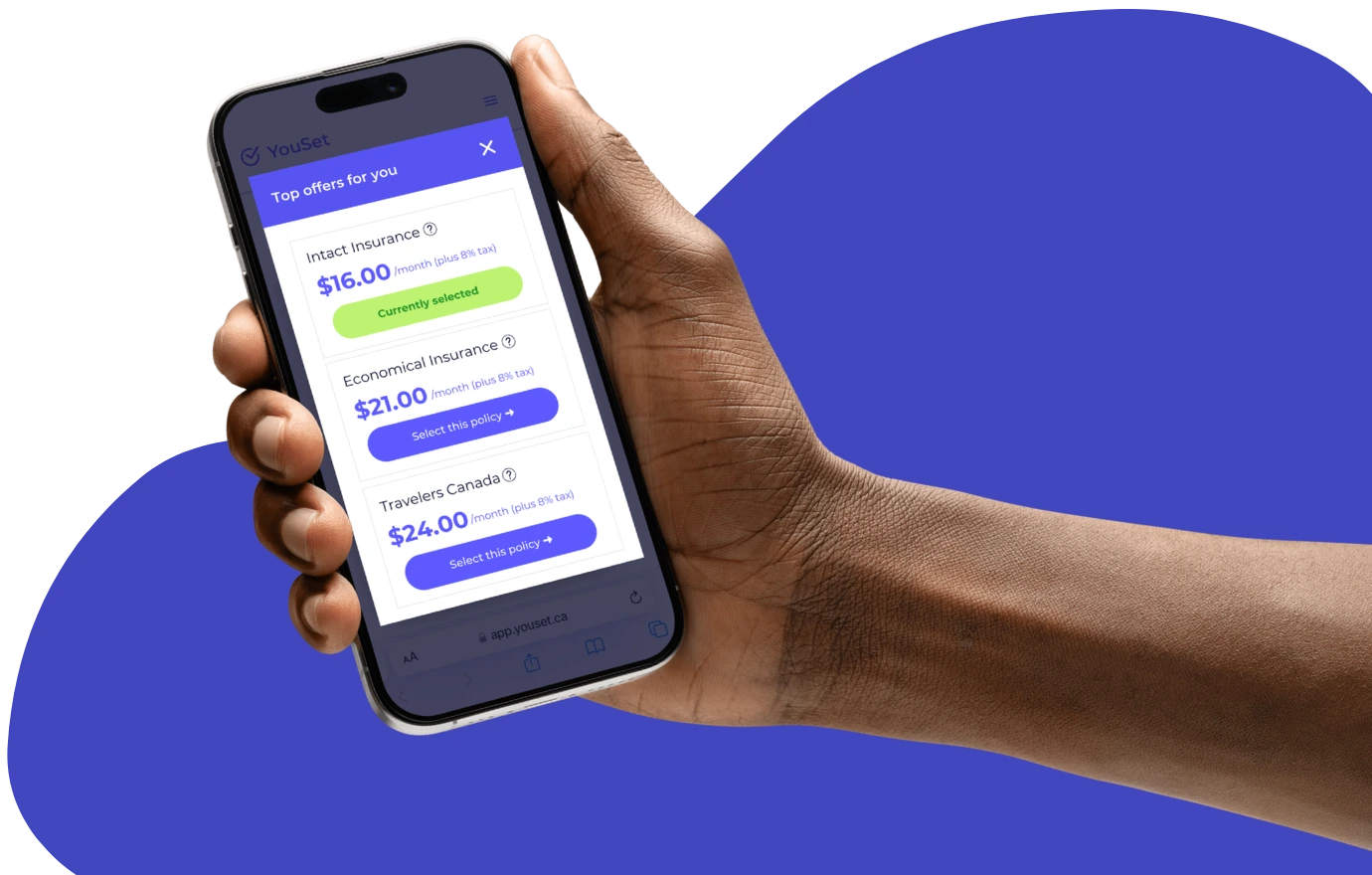
Once you’re ready to get a quote, you can work with a licensed digital broker in your new province. This will allow you to get a quote fast from anywhere, plus brokers can provide free guidance to help you understand how your new province’s rules differ from what you’re used to.
For example, if you’ve recently moved to Ontario or Quebec, you can get an auto insurance quote online with YouSet by following these simple steps:
One major advantage of getting a car insurance quote this way is that it automatically ensures your quote meets the minimum provincial requirements. That way, you’re not left guessing about what’s mandatory, especially when you’ve just moved and are unsure about the rules.
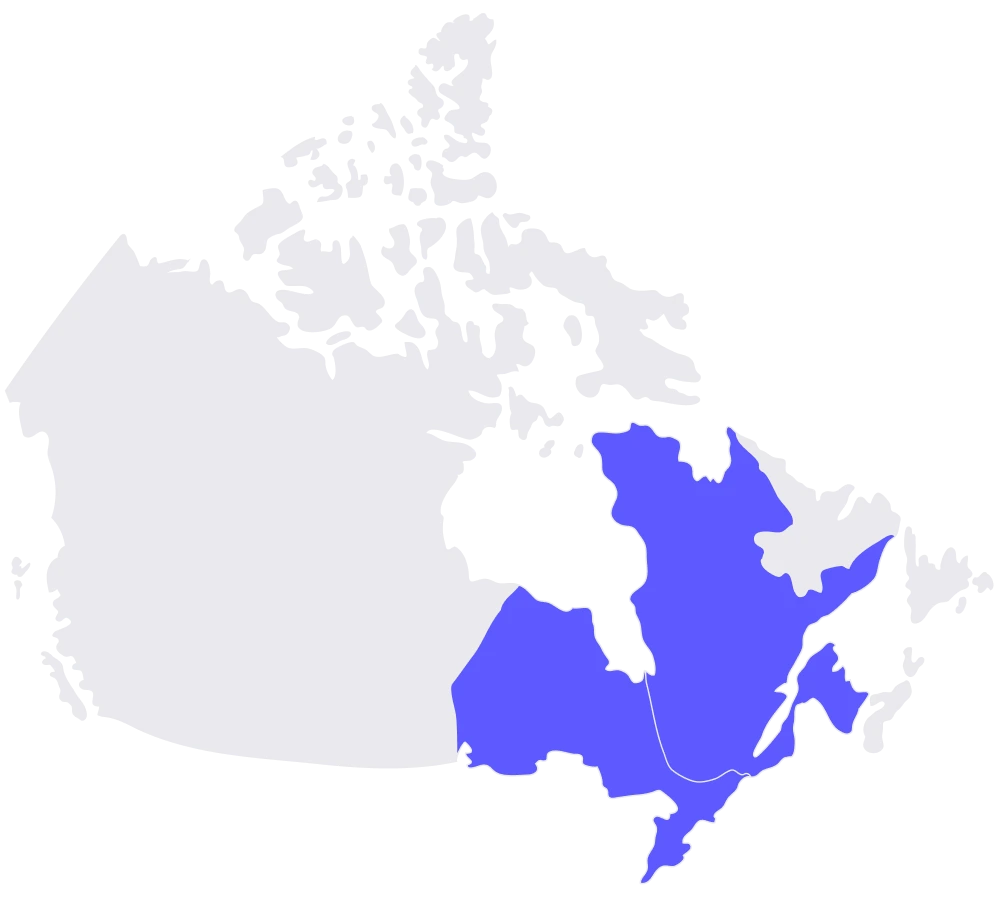
YouSet is a technology-driven insurance platform that simplifies buying and renewing insurance. Combining proprietary technology and the support of AMF and RIBO licensed brokers, we’re making it faster and easier to buy home and car insurance online from top insurers for less.





Get the best price year after year with price alerts at renewal. We’ll even re-shop to find you a better deal.