Condo insurance



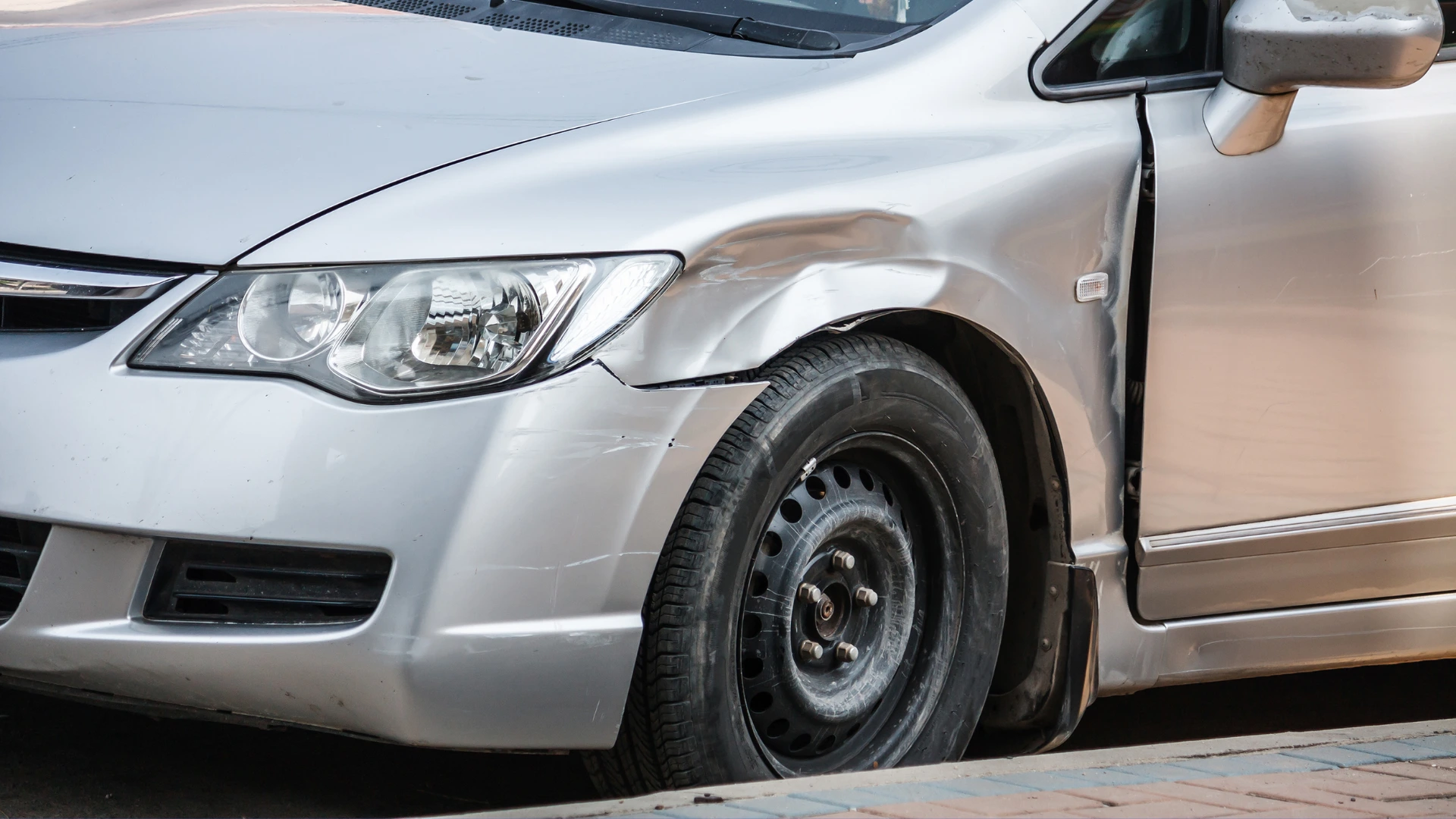
Fender benders can happen to the most careful drivers. Even if you have years of driving experience, situations like slow-moving traffic, tight parking lots, or a quick stop at an intersection can lead to a minor collision. These low-speed accidents are common and happen when you least expect them.
If you’ve just been in a fender bender, you’re probably unsure about what to do next. In this guide, we’ll walk you through exactly what to do after a fender bender, some common mistakes to avoid, and when you should report the accident to your insurance company.
Key takeaways
If you’ve been involved in a fender bender, stay calm and follow these steps:
A fender bender is a minor collision between two vehicles at low speeds that doesn’t result in serious injuries or damage. These types of collisions often happen in situations like slow-moving traffic, parking lots, or at intersections. Because the impact is usually light, the damage is often limited to minor dents, scratches, or bumper damage.
Some common examples include being bumped while backing out of a parking spot or lightly hitting another car at a stop sign. You can typically drive away after a fender bender, but only after you’ve made sure everyone is safe and you’ve exchanged information with the other driver.
While it can feel stressful in the moment, stay calm and follow these steps to properly handle a fender bender, so that you protect yourself if you need to file an insurance claim:
Your first priority should always be safety. Check yourself, the other driver, and any passengers or pedestrians involved for injuries. If anyone is hurt, call 911 immediately. Even in low-speed collisions, injuries like whiplash can occur.
Next, take a moment to assess your surroundings. Look for oncoming traffic, fluid leaks, or any other hazards that can make the situation unsafe. If the vehicles are blocking traffic, turn on your hazard lights to make sure other drivers can see you.
If the surroundings are clear and your vehicle is still drivable, move it to the shoulder of the road to help prevent further accidents and keep traffic moving. If it’s not possible, turn on your hazard lights and place warning triangles or cones around your car and stay in a safe location nearby.
Take a quick look at the vehicles involved and assess the damage. Common (minor) damage from fender benders can include:
Make sure your vehicle still appears to be in a safe, driveable condition, and note whether the damage appears minor or significant.
In many minor accidents, the police don’t need to be involved. However, you should call them if someone is injured, there is significant damage, or if the other driver is acting suspiciously or is uncooperative.
That said, rules can vary by province. For example, in Ontario, you need to call the police if:
Exchanging information with the driver at the time of the accident will make things much easier if you need to file a car insurance claim later. Exchange the following details:
If anyone witnessed the accident, ask for their contact information. They can help clarify what happened if there’s a disagreement later about how the collision occurred. Even a brief statement can be helpful if you decide to submit an insurance claim for the damage caused in the fender bender.
Document what happened, as long as it’s safe to do so. Take photos and videos of any damage, the vehicles involved, license plates, and the surrounding area. Note the time, date, location, and any road conditions that may have contributed to the accident. It can also help to use an accident worksheet to record all the key details while they’re still fresh.
Once you’ve left the scene, contact your insurance company to report the accident. Even if the other driver was at fault or the damage seems minor, notifying your insurer ensures the incident is properly documented. They’ll guide you through the next steps if a claim needs to be filed.
After a minor accident, it’s just as important to know what not to do. Avoiding these few common mistakes can help prevent further consequences:
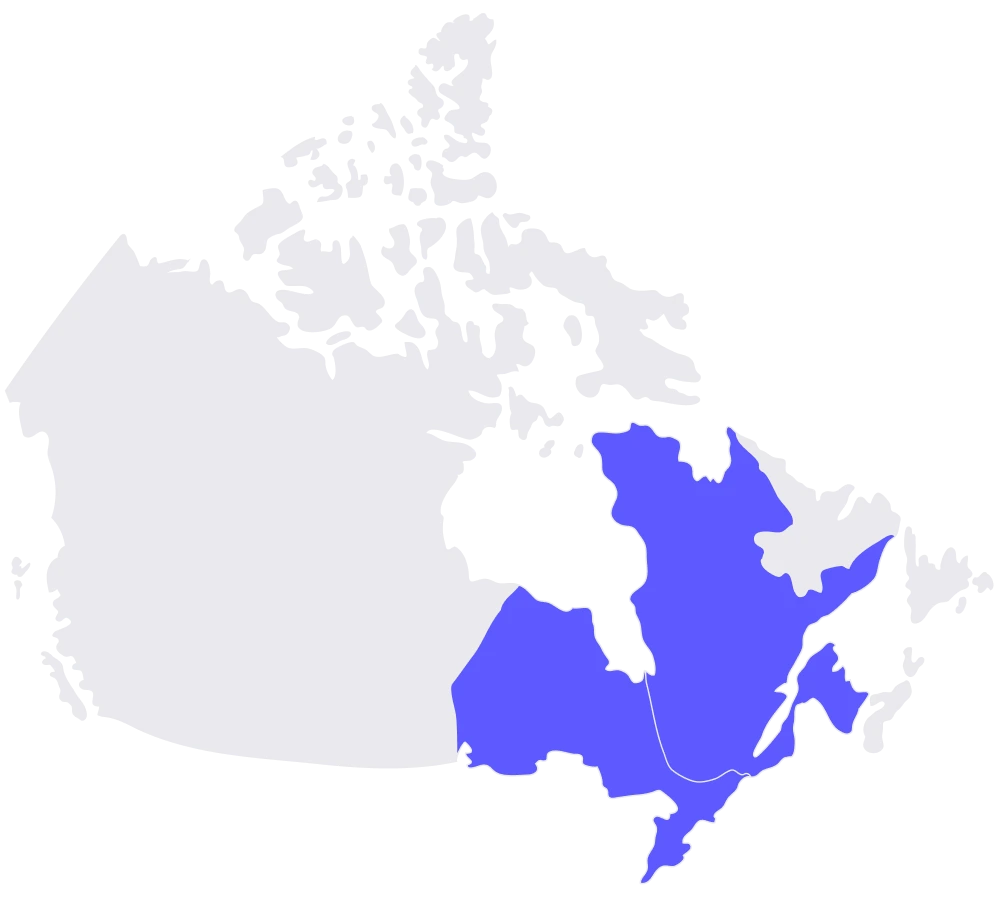
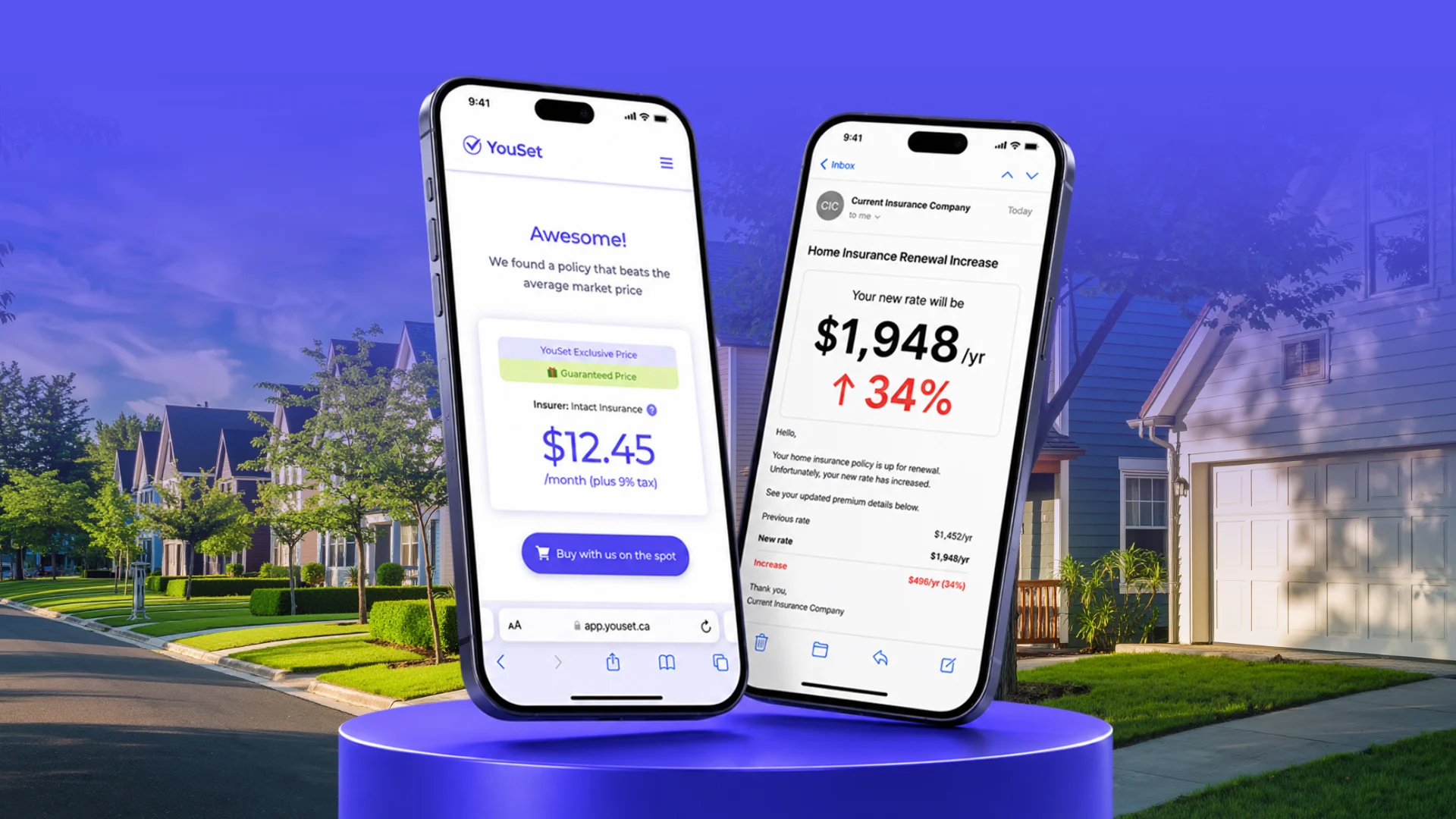
YouSet is a technology-driven insurance platform that simplifies buying and renewing insurance. Combining proprietary technology and the support of AMF and RIBO licensed brokers, we’re making it faster and easier to buy home and car insurance online from top insurers for less.





Our algorithms do the hard work comparing policies and prices from Canada’s top providers.
![PC Home Insurance vs. YouSet: Pros and Cons [2026]](https://youset.ca/wp-content/uploads/2026/05/PC-Home-Insurance-vs.-YouSet.webp)