Car insurance


When most people think of earthquake zones in Canada, the West Coast usually comes to mind. But the reality is that millions of Canadians live in regions with some level of seismic activity.
However, many people don’t realize that standard homeowners, condo, or tenant insurance policies don’t actually cover earthquake damage, making this type of coverage far more relevant than many Canadians realize.
In this guide, we’ll break down what earthquake insurance covers, how much it costs, and whether it’s worth it, plus how the risk changes across different parts of the country.
Key takeaways
Earthquake insurance is an optional add-on to your insurance policy that helps cover damages to your home in the event of an earthquake. It’s more worthwhile to have in higher-risk areas, like Coastal BC and along the St. Lawrence Valley in Ontario and Quebec.
Yes, most major insurance providers in Canada offer earthquake coverage as an optional add-on to home, condo, and tenant insurance. It’s most relevant in higher-risk areas, such as coastal British Columbia and along the St. Lawrence Valley in Ontario and Quebec.
This coverage comes at an additional cost, but it can save you from major out-of-pocket expenses. Even a moderate earthquake can cause cracked foundations, collapsed chimneys, or damage your belongings. In fact, according to Angi’s List in the US, the cost to repair earthquake damage to a home typically ranges from $5,000 to $25,000–sometimes more.
Earthquake insurance is an endorsement, meaning it’s an add-on to your existing home insurance policy that extends protection specifically for earthquake damage. Without it, most standard home insurance policies won’t cover losses caused by earthquakes. Generally, earthquake insurance helps cover damages to:
It also includes additional living expenses coverage if your home becomes uninhabitable due to earthquake damage. Coverage can also look a little different depending on your situation:
In short, earthquake insurance is designed to protect your property and financial stability after an earthquake, helping you get back on your feet faster.
One of the biggest differences between earthquake insurance and standard home insurance is the deductible. Most home insurance policies have a flat deductible, like $500 or $1,000. Earthquake insurance, however, usually comes with a percentage-based deductible, which makes it much higher.
According to the Government of Canada, earthquake insurance deductibles are typically between 5% to 20% of your coverage limit. That means the higher your coverage, the higher your deductible. For example, if you have $100,000 in earthquake coverage and your deductible is 10%, you’d need to pay $10,000 out-of-pocket before you’re eligible for reimbursement.
Whether or not earthquake insurance is worth it depends on your situation. If you’re a homeowner or renter in a higher-risk area like Coastal BC or along the St. Lawrence Valley in Quebec and Ontario, earthquake insurance can provide valuable protection against costly damage. In other regions, it may still be worth considering depending on your home, financial situation, and personal risk tolerance. Let’s take a closer look at how the risk and need for coverage vary across different regions of Canada.
Though many are small and go unnoticed, British Columbia sees thousands of earthquakes each year, with roughly 50 being felt. The magnitude 7.7 Haida Gwaii earthquake in 2012 served as a reminder of British Columbia’s earthquake risk. In light of this, earthquake insurance is generally considered to be worth it, especially if you live in seismically active areas like Vancouver Island or the Lower Mainland.
Quebec experiences hundreds of small earthquakes each year, most too weak to be felt. However, the province is part of the Western Quebec Seismic Zone and the Charlevoix Seismic Zone, both capable of producing damaging earthquakes. The 1732 Montreal earthquake and the 1925 Charlevoix earthquake (magnitude 6.2) are reminders that the region isn’t immune. Because the risk is concentrated along the St. Lawrence Valley, earthquake insurance can be a smart consideration, especially if you live near Gatineau, Montreal, or Quebec City.
Ontario isn’t usually the first place you might think of when it comes to earthquakes, but the Western Quebec Seismic Zone extends into parts of Eastern Ontario. Small earthquakes are recorded regularly, and stronger ones, like the 2010 magnitude 5.0 Ottawa earthquake, have caused minor damage. The earthquake risk in Ontario is relatively low, but in areas closer to Ottawa and the St. Lawrence Valley, earthquake insurance may still be worth considering.
Atlantic Canada experiences earthquakes, although most are small and rarely cause significant damage. The region sits near the edge of the North American plate, and the Grand Banks earthquake of 1929 (magnitude 7.2) off Newfoundland’s coast triggered a deadly tsunami, highlighting that the risk is not zero. While earthquakes here are less frequent and often offshore, earthquake insurance might be worth considering, particularly in Newfoundland and New Brunswick.
The Prairie provinces are among the least seismically active regions in Canada. While small earthquakes do occur, they are rare and usually too weak to be felt. Alberta has seen minor seismic activity, some of it linked to natural resource extraction, but the overall risk remains very low. For most in the Prairies, earthquake insurance is generally not necessary.
The Yukon sits near the boundary between the Pacific and North American plates, making it one of the more seismically active parts of Canada outside B.C. Earthquakes are not uncommon, with occasional moderate events being felt in communities. While the population is more dispersed, residents in Whitehorse and surrounding areas may benefit from earthquake coverage, given the region’s geology.
Earthquakes in the Northwest Territories are quite rare, though the territory has experienced moderate seismic activity, especially in its western regions near the Yukon and the Mackenzie Mountains. Since the risk is considered low for most residents, earthquake insurance may be less worth it than it would be elsewhere.
Nunavut is Canada’s least seismically active region. Earthquakes are extremely rare, and the risk to homes and communities is considered negligible. Because of this, earthquake insurance is generally considered unnecessary for residents of Nunavut.
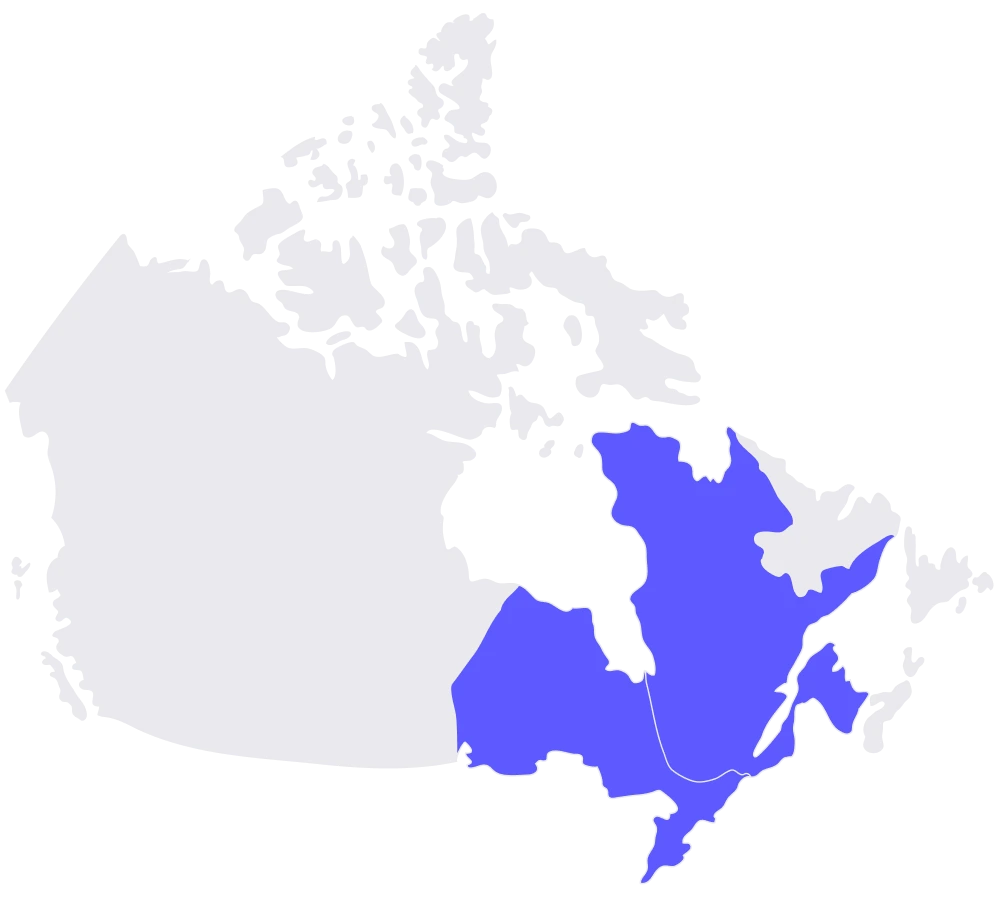
YouSet is a technology-driven insurance platform that simplifies buying and renewing insurance. Combining proprietary technology and the support of AMF and RIBO licensed brokers, we’re making it faster and easier to buy home and car insurance online from top insurers for less.





Our algorithms do the hard work comparing policies and prices from Canada’s top providers.