Tenant insurance


Moving into your first apartment is an exciting step in your life. You have newfound freedom and a space to make your own. But between planning, packing, and coordinating move-in details, there’s a lot to do.
There are a bunch of small but important tasks that can easily get overlooked in the chaos, like setting up utilities and changing your address, but don’t worry, we’ve got you covered. Follow this first apartment moving checklist to help you stay organized and make your move as stress-free as possible.
Key takeaways
Follow this checklist when moving into your first apartment:
Take photos and videos of your new apartment as soon as you move in, noting any existing damage, leaks, or pest issues. This way, you’ll have a record of the apartment’s condition and won’t be blamed for problems that were already there. If a dispute ever arises, having dated documentation can protect you.
When moving into your first home, it’s easy to feel like you need to buy everything at once – but you really don’t. Start with the basics and build from there. A good rule of thumb is, if you catch yourself thinking, “I wish I had…” or looking for something you don’t own, add it to a list and buy it later. This will also help you manage your finances, as buying everything for the first time can be expensive.
To get started, here’s a list of essentials to have on move-in day:
Bedroom:
Kitchen:
Bathroom:
Miscellaneous:
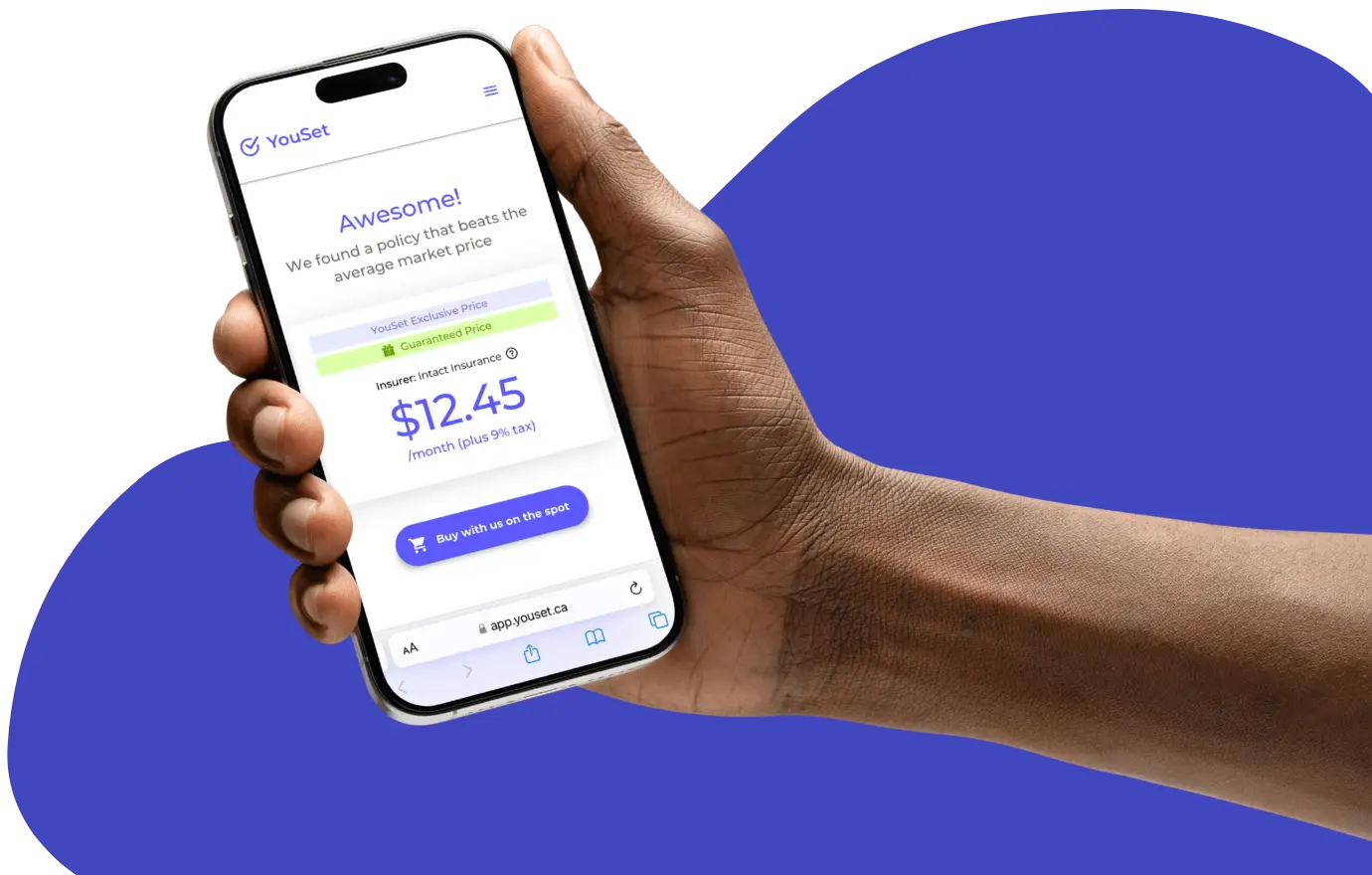
Even if it’s not required by law, it’s essential to get tenant insurance, as it protects your belongings from risks like theft, fire, or water damage. It also includes liability coverage, which protects you if you accidentally cause damage or injury to others. Fortunately, you can use YouSet to compare quotes and customize your coverage in minutes.
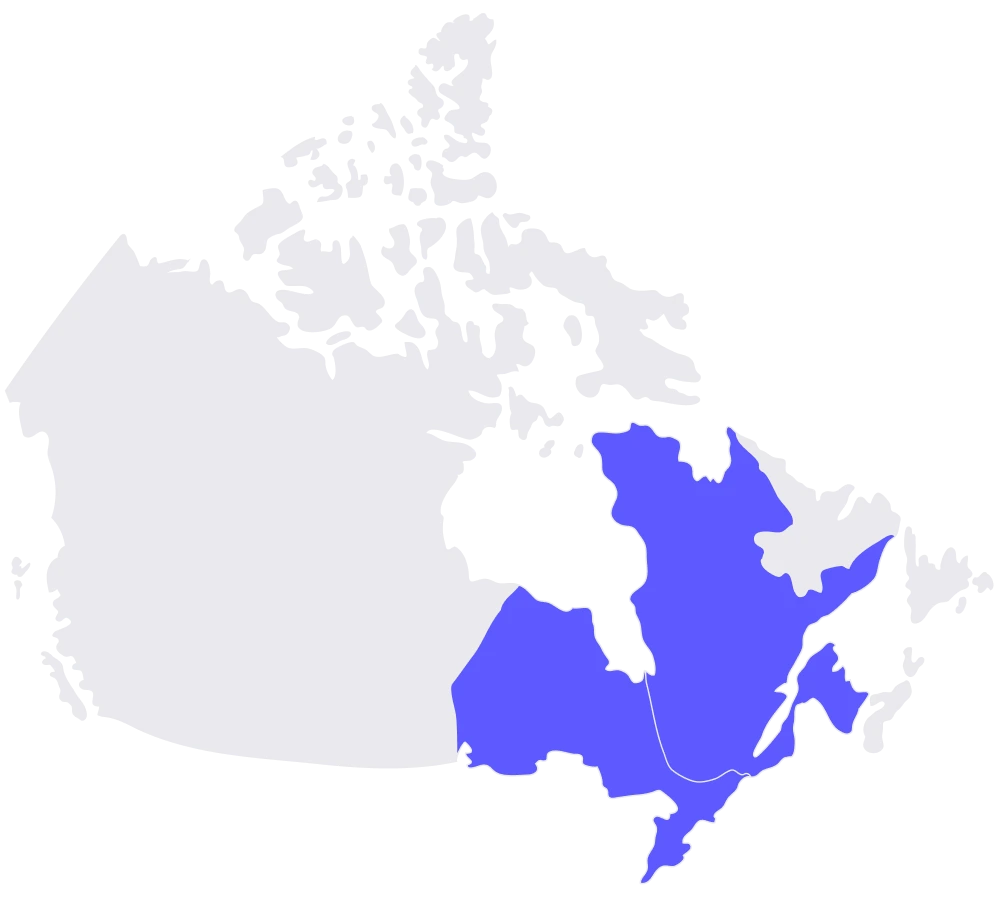
If utilities aren’t included in your rent, you’ll need to set up an account with a local energy provider (ex. Hydro One in Ontario or Hydro Quebec in Quebec). Set everything up a few days before your move so you have power and water from day one.
First, check if internet is included in your rent. Some buildings offer free Wi-Fi, but if yours doesn’t, you’ll need to compare providers and plans available in your area. Compare factors like speed, price, contract terms, and availability. Try to book installation in advance (if required), so your internet is ready when you move in.
Confirm with your landlord how and when you’ll receive the keys or access codes. In some cases, you may get them a few days (or even weeks) before your move, while in others, you’ll meet your landlord on move-in day.
Take some time to carefully review your lease, as it’s an important, legally binding document that outlines your rights and responsibilities as a tenant. Make sure you understand what’s included in the rent, as well as key details like the lease term, rent amount, and payment schedule. Pay attention to any clauses that outline policies on maintenance, repairs, guests, and pets. And if something doesn’t make sense, ask your landlord for clarification.
Tenant rights are a bit different across Canada, so it’s important to understand the rules that apply in your province. This includes topics like rent increases, eviction rules, and what landlords can and can’t require from you.
For example, in Quebec, security deposits are illegal. You typically only pay for your first month’s rent upfront. This means that if your landlord is requesting any other payment from you, it’s a red flag and you should raise a concern.
Some buildings have their own rules that apply to all residents. These can cover topics such as noise levels, pets, guest policies, garbage disposal, use of shared spaces, and moving procedures. Review these to avoid fines, complaints, or misunderstandings.
Make sure all detectors are present and have working batteries. These are essential for your safety, so test them when you move in and notify your landlord if anything isn’t working.
Find out where the fire extinguisher is (in your unit or in the building) and make sure it’s easily accessible. You’ll hopefully never have to use it, but in an emergency, knowing exactly where it is can make all the difference.
Learn how waste disposal works in your building or neighbourhood. You might be able to find this information on a bulletin posted around, or by entering your postal code on your city’s website to see the collection schedule. In some municipalities, you’ll have to register online for waste collection.
Right after you move, update your address with your bank, credit cards, government services, subscriptions, and any other important accounts. This helps ensure no mail gets sent to your old address. If needed, you can forward your mail for a few months with Canada Post mail forwarding.
YouSet is a technology-driven insurance platform that simplifies buying and renewing insurance. Combining proprietary technology and the support of AMF and RIBO licensed brokers, we’re making it faster and easier to buy home and car insurance online from top insurers for less.





Get the best price year after year with price alerts at renewal. We’ll even re-shop to find you a better deal.