
Car insurance




When you get behind the wheel of a car that isn’t yours, that you don’t pay for, and that you’re unfamiliar with, it’s normal to feel a bit uncertain. It’s why so many people do a quick search to find out if they can drive someone else’s car and whether they’ll be insured. In fact, that may be why you’re here right now.
Fortunately, this article answers the common questions drivers have about lending a car to a friend or driving someone else’s car in Canada, and the impact it has on car insurance. As always, it’s important to review your policy documents or contact your insurance provider or broker if needed, since terms and conditions can vary between policies.
Your friend can drive your car even if they’re not listed on your insurance policy, as long as they have a valid driver’s licence and you have active car insurance. However, if they regularly drive your car, live in your household, or are considered a primary or secondary driver, you may need to add them to your policy.
Yes, your friend can drive your car in Canada, even if they aren’t listed on your insurance. In order for them to legally drive your car:
When you drive someone else’s car with their permission and a valid driver’s license, this is called “permissive use.” With permissive use, the owner of the car’s insurance policy will typically extend to cover you in case of an accident or other covered incident.
You might ask, “Why not use my insurance?” The reason is that in Canada, car insurance is tied to the vehicle, not the driver. This means when you drive someone else’s car, their policy applies, not yours. This structure ensures that each vehicle on the road has adequate coverage based on its own characteristics, like its condition, safety features, and value.
Yes, your car is usually insured if you lend it to a friend with a valid driver’s license, provided they have your permission and comply with the terms of your policy. In other words, your friend is typically covered under your insurance if they are an occasional driver using your car under permissive use. That being said, there are situations where you may need to add someone to your insurance:
Adding them to your policy as an occasional driver reduces risk, making sure that both you and the driver are properly covered.
If you let someone else drive your car and they get into an accident, here are the steps to follow: Safety first: The driver should make sure everyone involved is safe, move to a secure location if possible, and call emergency services if needed.
Before lending your car to a friend, it’s a good idea to take a few precautions. This helps reduce uncertainty and makes sure you and your friend are both protected.
If we flip the narrative, you may be wondering, “Can I drive someone else’s car with my insurance?” In Canada, your own car insurance doesn’t apply when you drive someone else’s vehicle. As long as you have their permission and a valid license, their insurance typically covers you.
It is always a good idea, though, to ask the owner about their coverage first before you get behind the wheel. Some policies may have restrictions on permissive use or exclude certain drivers. Knowing this ahead of time means that you won’t be left unprotected if something happens.
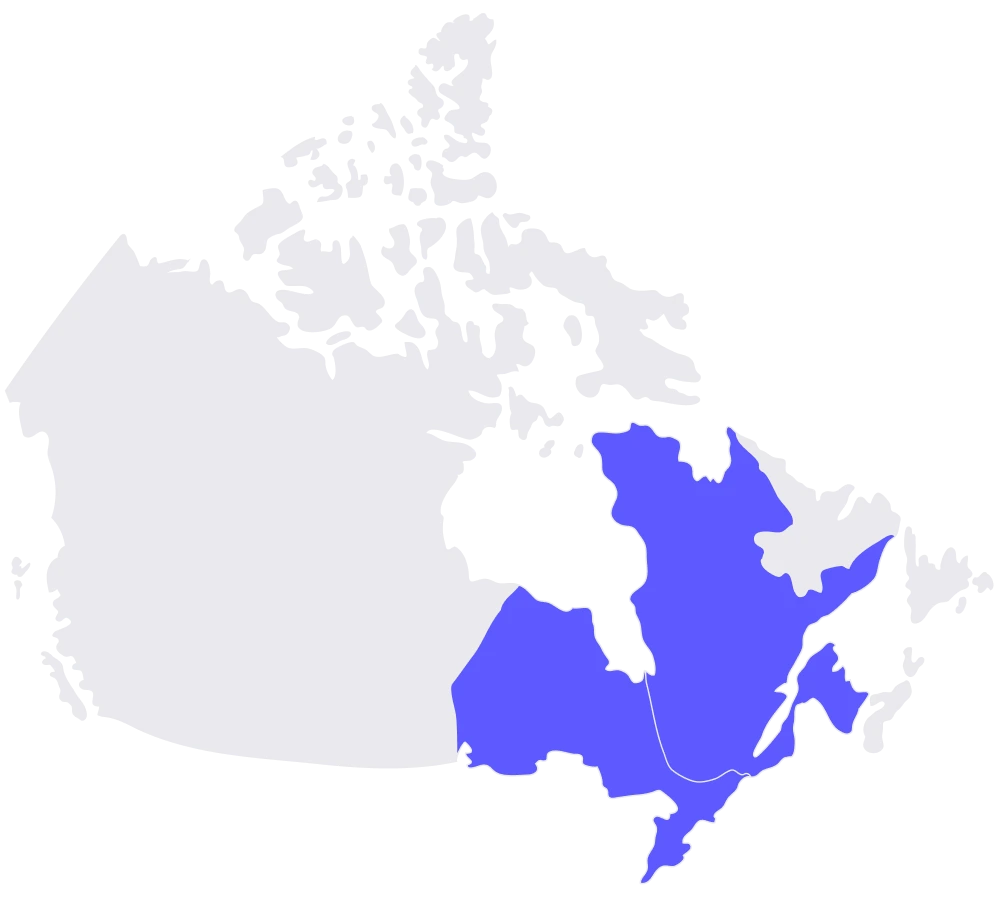
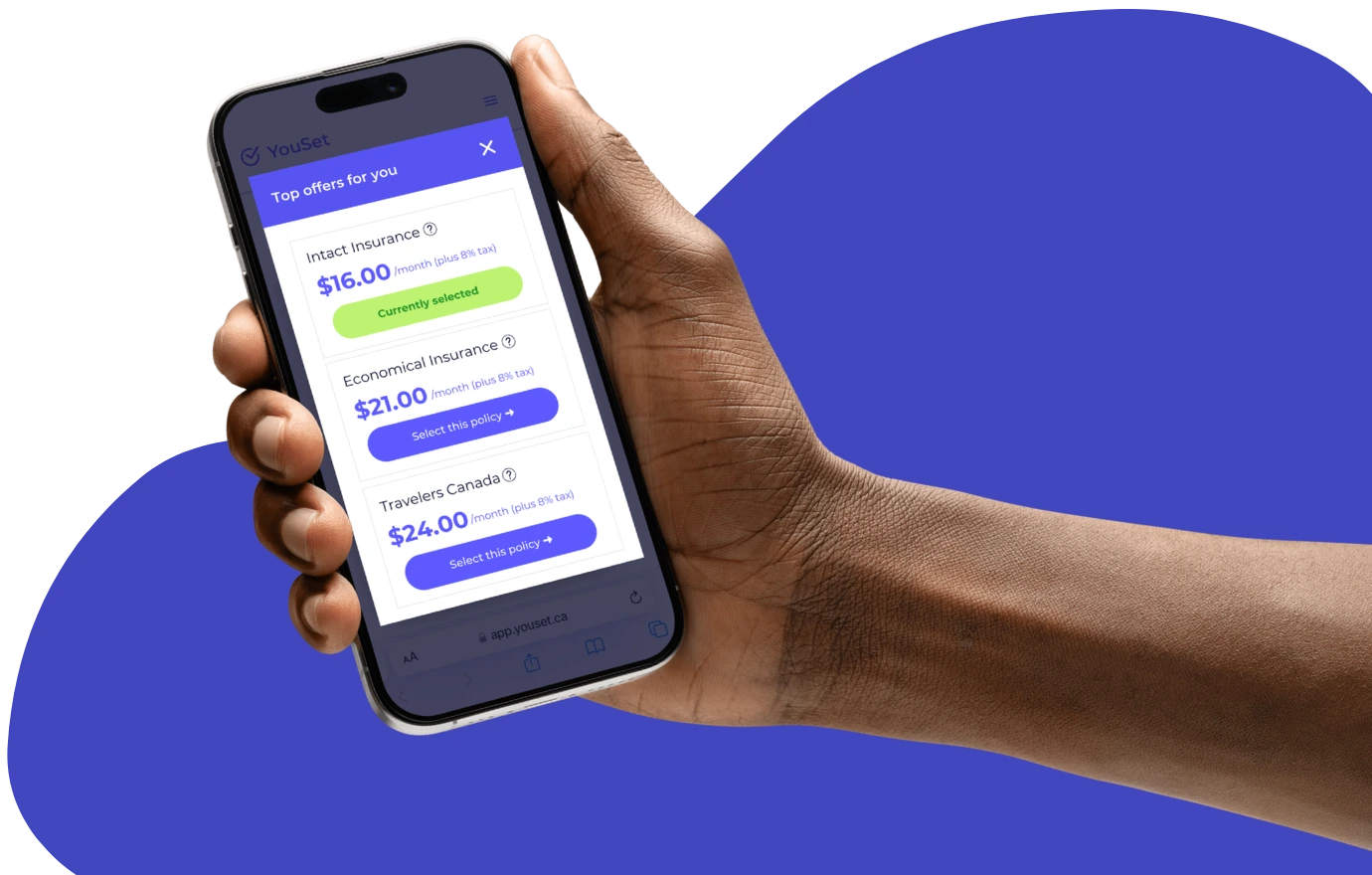
YouSet is a technology-driven insurance platform that simplifies buying and renewing insurance. Combining proprietary technology and the support of AMF and RIBO licensed brokers, we’re making it faster and easier to buy home and car insurance online from top insurers for less.





Get the best price year after year with price alerts at renewal. We’ll even re-shop to find you a better deal.
![PC Car Insurance vs. YouSet: Pros and Cons [2026]](https://youset.ca/wp-content/uploads/2026/04/PC-Car-Insurance-vs.-YouSet.webp)